


To succeed in digital marketing, understanding your competition is key. Competitive analysis helps you identify your rivals’ strengths and weaknesses, allowing you to improve your own strategy.
By examining their online presence, content, and marketing tactics, you can uncover opportunities to differentiate your business and gain an edge.
This guide will show you how to conduct a competitive analysis that will provide clear insights and actionable steps for improving your digital marketing efforts.
1. Understanding Competitive Analysis in Digital Marketing
Competitive analysis in digital marketing involves researching and evaluating competitors’ online strategies, such as SEO, social media, content, and advertising tactics. According to recent statistics, 70% of marketers believe that competitive analysis is crucial for understanding market trends and improving their own strategies1. This analysis allows businesses to identify their position relative to competitors and capitalize on areas where they may have an advantage. Furthermore, companies that conduct regular competitive analysis are 12% more likely to report higher revenue growth than those that do not3.
2. Identifying Your Key Competitors
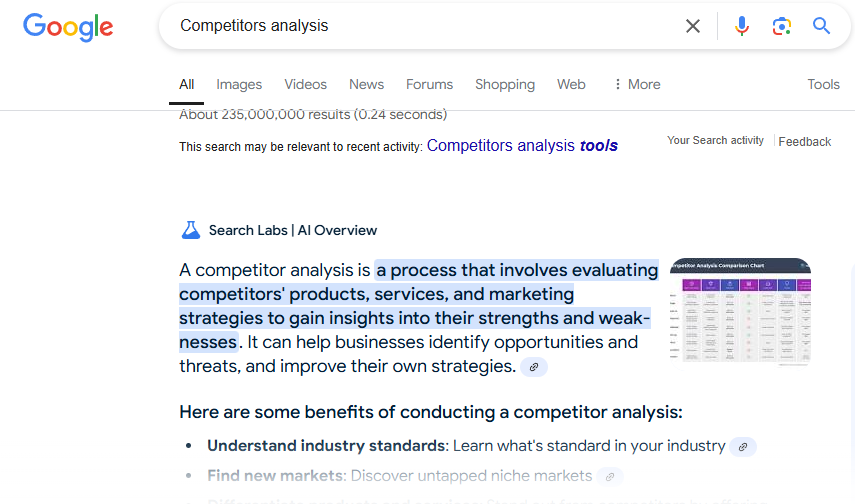
Identifying both direct and indirect competitors is essential. Direct competitors offer similar products or services to the same audience, while indirect competitors may provide different solutions but cater to the same customer needs. Research indicates that 60% of businesses use tools like SEMrush and Google Search to identify their top competitors2. Typically, narrowing down the list to five to ten key competitors allows for a more focused analysis.
3. Setting Goals for Your Competitive Analysis
Setting clear goals is vital before conducting a competitive analysis. A study found that companies with defined objectives are 30% more likely to achieve successful outcomes from their marketing efforts4. Goals may include improving search engine rankings or enhancing social media engagement. Aligning these goals with overall marketing strategy ensures cohesive efforts toward business growth.
Read also: The Importance of Lead Generation in Digital Marketing
4. Analyzing Competitors’ SEO Strategies

SEO is a core area for competitive analysis due to its direct impact on online visibility. Tools like Ahrefs and SEMrush can provide insights into competitors’ SEO performance. Statistics show that 93% of online experiences begin with a search engine, emphasizing the importance of effective SEO strategies
4.1. Keyword Analysis
Understanding what keywords competitors rank for can reveal where they get their traffic. Research indicates that 75% of users never scroll past the first page of search results, making keyword strategy critical for visibility2. Identifying high-performing keywords relevant to your business can help create a robust keyword strategy.
4.2. Backlink Analysis
Backlinks from reputable sites signal authority to search engines. Companies with a strong backlink profile see an average increase of 20% in organic traffic compared to those with weaker profiles3. Reviewing competitors’ backlinks can uncover valuable sources and potential link-building opportunities.
5. Studying Content Marketing Efforts
Content marketing is essential for audience engagement. Data shows that content marketing generates three times more leads than traditional marketing methods while costing 62% less4. Analyzing competitors’ content strategies can provide insights into what resonates with the target audience.
5.1. Content Format and Frequency
Competitors may produce various content types—blogs, videos, infographics—at different frequencies. Research indicates that consistent publishing increases traffic by up to 30% over time.
5.2. Engagement and Reach
High engagement rates on social media indicate effective content strategies. Businesses with high engagement levels report a 25% higher conversion rate compared to those with lower engagement
Read also: Digital Marketing for Your Business: 10 Essential Tips for Success
6. Examining Social Media Presence and Engagement
Social media presence significantly impacts brand visibility. Statistics show that 54% of social browsers use social media to research products3. Observing which platforms competitors prioritize and how they interact can inform your own social media strategy
7. Evaluating Competitor Paid Advertising Strategies
Paid ads are crucial for visibility and conversions. Research shows that businesses earn an average of $2 in revenue for every $1 spent on Google Ads, highlighting the effectiveness of well-planned advertising strategies
7.1. Ad Content and Design
Effective ads combine brand values with compelling visuals. Studies indicate that ads with images receive 94% more views than those without
7.2. Audience Targeting
Analyzing demographic targeting reveals which audience segments competitors prioritize. Companies that refine their targeting strategies see up to a 30% increase in ad effectiveness
8. Reviewing Competitor Website and User Experience (UX)
A seamless website experience is essential for customer retention. Research shows that a one-second delay in page load time can lead to a 7% reduction in conversions3. Analyzing competitors’ website speed, navigation, and mobile responsiveness can identify strengths and weaknesses.
9. Customer Reviews and Reputation Management
Competitor reviews on platforms like Google Reviews reveal customer satisfaction levels. Statistics indicate that 84% of people trust online reviews as much as personal recommendations, making reputation management critical
10. Pricing Strategy and Offers Analysis
Competitor pricing significantly influences customer decision-making. Research shows that price sensitivity varies by industry; understanding competitor pricing models can help adjust your own pricing strategy effectively
11. Utilizing Competitive Analysis Tools for In-Depth Insights
Tools like SEMrush, Ahrefs, and BuzzSumo streamline competitive analysis by providing insights on SEO, social media, and content performance. Businesses using these tools report a 15% improvement in strategic decision-making capabilities compared to those who do not utilize such resources
12. Tracking Competitor Progress Over Time
Consistent tracking of competitor updates is key to staying relevant. Companies that monitor competitor activity regularly are better positioned to adapt their strategies promptly, resulting in a 20% increase in market responsiveness
Read also: How to Build Brand Awareness: 7 Techniques Every Business Needs to Know in 2025
13. Developing Your Actionable Insights and Strategies
After gathering insights, compiling them into actionable strategies is crucial. A well-defined strategy based on competitive insights can lead to a 25% increase in overall marketing effectiveness
14. Setting Up KPIs to Measure Success Post-Analysis
Using KPIs like traffic, engagement, and conversions helps track progress post-analysis. Companies that regularly adjust their KPIs based on evolving marketing objectives see an average increase of 30% in overall performance metrics over time
Key Takeaways
Competitive analysis in digital marketing is a powerful tool for discovering what works and what doesn’t within your industry. By regularly assessing your competitors’ strategies and adapting accordingly, you’ll maintain a competitive edge and foster sustainable growth.
Frequently Ask Questions for Conducting Competitive Analysis
Competitive analysis aims to understand competitor strategies to make informed decisions that improve a brand’s online presence.
Ideally, businesses should conduct analysis quarterly, with more frequent checks on specific areas like social media and paid ads.
Free tools include Google Alerts, Ubersuggest for basic SEO insights, and Social Mention for social media analysis.
Use tools like Social Blade and Facebook Ad Library to track social engagement, post frequency, and ad strategy.
Avoiding over-reliance on one source, neglecting indirect competitors, and failing to set clear objectives can lead to ineffective analysis.